
In order to capture the full spectrum of light I’ve purchased a Cannon EOS 1100D thats had its image sensor glass replaced with a material that allows infra-red and ultra-violet light to be captured by the sensor
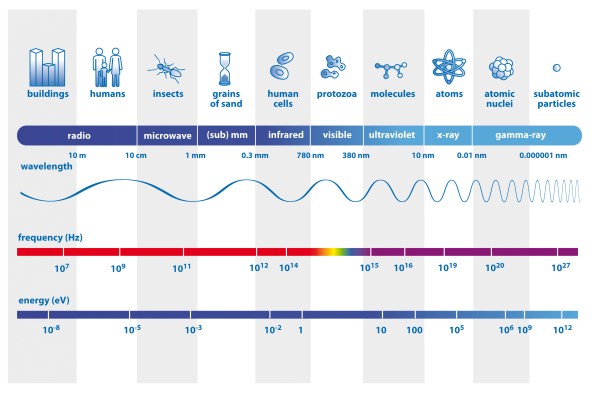 I also added a 50mm prime lens to the body to allow me to capture sharper images on an older body camera. I was forced to get this older bodied camera as it was the only camera readily available with a full spectrum conversion.
After my camera arrived I ordered a filter kit for the camera, I did this cause I needed a UV filter to allow me to adjust what part of the light spectrum I am capturing. In order to have complete control of captured light I also ordered a variable IR, This will allow me to fine tune what amount of infra-red light the camera can record. Having these two filters working in conjunction with each other will give me the ability to capture colours that would otherwise be invisible to the naked eye.
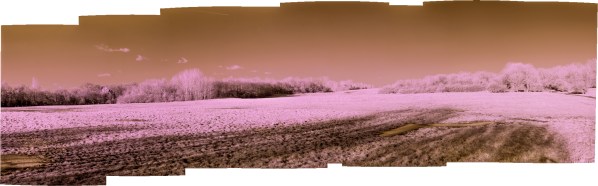
Bellow are some of the first images I captured using this set-up, However the images looked fairly normal just with a red or purple tinge depending on how much IR light I allow into the camera using the variable filter. I also decided to further explore the idea of boundaries I would attempt to capture large photo merges by capturing multiple images and merging them together to capture a vast landscape.
This Photo scape I felt really captured the alien nature of full spectrum photography and transformed a series of similar images into a vast and confusing landscape.

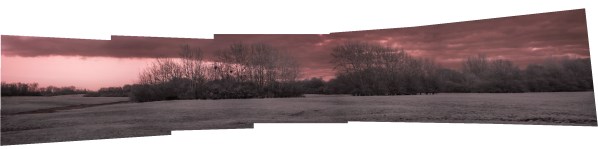
Images require a lot of adjustment in Lightroom to allow for the required effect and to counter the colour tinge an all the images
However I accidentally discovered that for the colours I wanted I needed to capture the images in long exposure, this can only be achieved using ND filters if I want to take pictures during the day. This limits the light that can enter the camera allowing long exposures during day light. For the best colour images I need to set the variable IR filter to 590-600 nm, This will retain the highest amount of colour information in the raw data. This filter setting is best for false colour IR photography.
This previous theory about needed to capture long exposures was false, It turns out all I needed to do was set the white balance on the camera. However this was made difficult because the white balance presents on the camera didn’t cover the spectrum of light I was trying to capture. However I could get around this by taking a image of a white cloth and setting the cameras white balance to this image.
One issue is infra-red light does not focus at the same point as visible light, this is called infra-red focus shift. This means that the auto focus feature on most cameras will not work correctly as the light focus point it is looking for will not be visible. This means that most images will be needed to focused manually.
When my images where imported to lightroom they all had a red tint again ( I got around this issue on my camera by adjusting the white balance), however this hasn’t helped how the images render in lightroom. However I got around this by creating a custom camera profile with adobe DNG where I set the image temperature similar to how it would appear on the camera. Then all I have to do is select the IR camera profile in lightroom, an further edit my images from here.
I am really starting to enjoy full spectrum photography as its really forcing me to go out of my comfort zone with my edits and push the conventional boundaries of how to edit images in post. I personally have always tried to enhance colours with my normal edits but this is forcing me to change the colours entirely, giving me so much more freedom with how I edit my work.
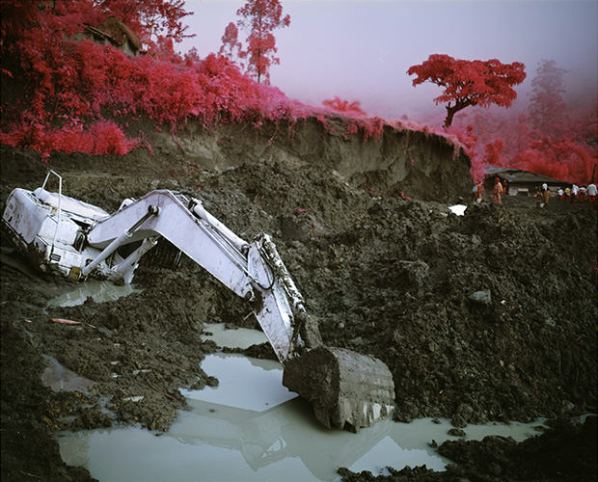
For my next shoot I want to attempt to capture the false colour IR images like those captured on film by Richard Mosse. Mosse photographed landscapes, villages, and people in Eastern Congo using Kodak Aerochrome infra-red film. His images look fairly similar to reality yet one or two colours are completely wrong reminding you how different full spectrum work is, Yet my work thus far has just appeared to have a colour tinge. So I plan to adopt a new technique (see below for more details) to attempt false colour images similar to Mosse
The above shoots have mainly been experimentation and adjustment to get used to using my IR camera. From this moment on I would like to shoot at physical boundaries to further link with the concept of boundaries
 Boundaries